

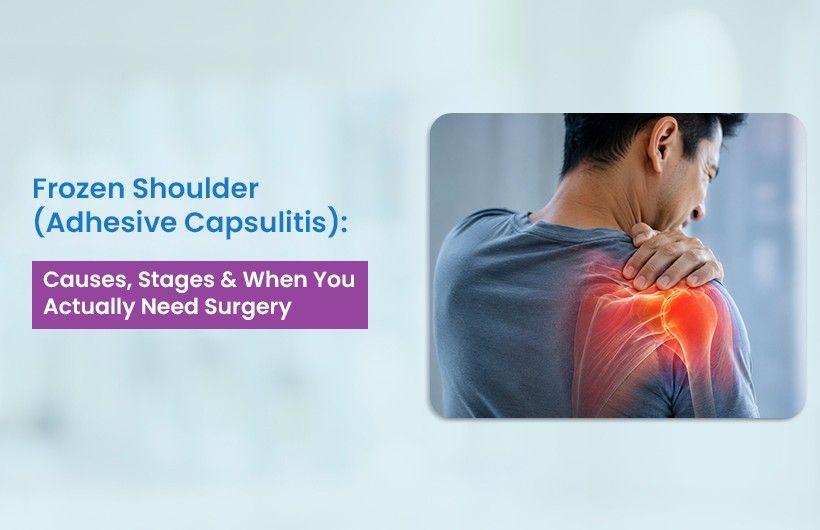
That shoulder won’t let you reach the top shelf or makes getting dressed feel like a wrestling match it might be frozen shoulder. Or it might not be. And that distinction matters more than most patients realize.
Frozen shoulder (adhesive capsulitis) is one of the most over-diagnosed conditions I see in my orthopedic clinic. Nearly any persistent shoulder pain gets labelled “frozen shoulder” which means patients often end up treating the wrong thing for months. If you’re looking for frozen shoulder treatment in Ahmedabad, the first thing I want you to have is an accurate diagnosis. That alone will save you time, money, and a lot of unnecessary pain. As the best orthopedic doctor in Ahmedabad, I’d rather give you an honest picture than a comfortable one.
Table of Contents
ToggleWhat Is Frozen Shoulder and What It Isn’t
True frozen shoulder, or adhesive capsulitis, is a condition where the capsule surrounding your shoulder joint becomes inflamed, thickens, and contracts. Over time, scar tissue forms inside the capsule, restricting movement in all directions, not just one.
That last part is important. If your shoulder hurts when you raise your arm but moves freely in other directions, it’s likely something else like a rotator cuff problem, bursitis, or referred pain from the neck. True frozen shoulder restricts passive movement too, meaning even if someone else moves your arm for you, it won’t go far.
I see patients who’ve been doing frozen shoulder physiotherapy for three months with no improvement, and it turns out they never had a frozen shoulder to begin with. Getting the right diagnosis first isn’t just good medicine; it’s the difference between six weeks and six months of treatment.
Who Gets Frozen Shoulder?
Frozen shoulders most commonly affect people between 40 and 60 years old. Women are more likely to develop it than men, though we don’t fully understand why.
A few risk factors consistently appear in research and in my own patient population in Ahmedabad:
- Diabetes: People with diabetes have a 10 to 20% chance of developing frozen shoulders, compared to 2 to 5% in the general population. It also tends to be more severe and slower to resolve in diabetic patients.
- Prolonged immobility: A sling after a fracture, extended bed rest, or avoiding shoulder movement after an unrelated surgery can trigger it.
- Thyroid disorders: Both hypothyroidism and hyperthyroidism appear to increase risk.
- Previous shoulder injury or surgery: The shoulder can “freeze” as a response to trauma or post-operative stiffness.
If you have diabetes and shoulder pain, don’t come in early. Waiting only makes the stiffness harder to reverse.
The Three Stages and Why They Matter for Treatment
Understanding which stage, you’re in changes what treatment we recommend. Most people who Google their symptoms find the same generic “three stages” summary without any guidance on what to do in each one.
Stage 1: Freezing (2 to 9 months)
This is a painful phase. The shoulder aches constantly, often worse at night, and movement starts becoming limited. At this stage, aggressive physiotherapy can worsen pain. Gentle range-of-motion work and pain management with anti-inflammatory medication or a corticosteroid injection into the joint often help more.
Stage 2: Frozen (4 to 12 months)
Pain often decreases in this phase, but stiffness is at its worst. Daily activities are significantly affected. This is when structured physiotherapy becomes the main treatment: stretching, manual therapy, and guided home exercises to slowly reclaim movement. Most patients respond well with patience and consistency.
Stage 3: Thawing (5 to 24 months)
Movement gradually returns. Most patients recover fully with non-surgical treatment, though the timeline can feel frustrating. Knowing it’s coming helps you stick with it.
Total duration from start to full recovery ranges from one to three years. I tell my patients this upfront because expecting to be “fixed” in a few weeks leads to unnecessary panic and, sometimes, unnecessary surgery.
How Is Frozen Shoulder Treated?
Most frozen shoulder cases are managed without surgery, and I want to be clear about this because several clinics in Ahmedabad lead with surgical options when conservative care would have worked just fine.
Non-surgical treatment includes:
- Anti-inflammatory medications (NSAIDs) for pain management
- Corticosteroid injections into the joint capsule are most effective in the early freezing stage
- Physiotherapy focuses on gentle progressive stretching and range-of-motion exercises
- Hydrodilatation is a saline and steroid injection that expands the joint capsule, useful for resistant cases
- Home exercise program that you do consistently
The truth is that many patients improve significantly with a combination of injections and physiotherapy over several months. Surgery is not where we start.
When does surgery become necessary?
If a patient has completed a proper course of physiotherapy and injection therapy over 6 to 12 months with no meaningful improvement, we consider two surgical options:
- Manipulation Under Anesthesia (MUA): The shoulder is moved through its full range while the patient is under anesthesia, physically breaking up the adhesions. It’s a short procedure, typically under 30 minutes, followed by intensive physiotherapy.
- Arthroscopic Capsular Release: A keyhole procedure where I cut through the thickened, contracted capsule using arthroscopic instruments. This gives the shoulder its mobility back more precisely than MUA and is particularly useful for advanced or very resistant cases. You can read more about how arthroscopic treatment works for shoulder conditions in our shoulder replacement surgery guide.
Both options work. The right one depends on how long you’ve had symptoms, how restricted the joint is, and whether you have other shoulder pathology alongside the frozen shoulder.
What About Exercises at Home?
Yes, they matter, but timing and technique matter more than effort. Aggressive stretching in the freezing stage often aggravates inflammation and delays recovery. In the frozen stage, consistent gentle mobility work (pendulum exercises, towel stretches, cross-body arm pulls) done daily is far more effective than occasional intense sessions.
If you’re not sure which stage you’re in, don’t self-prescribe a YouTube exercise routine. Knowing whether your shoulder needs rest, injection, or active stretching right now, what is exactly a proper assessment will tell you. Understanding whether you’re dealing with a joint problem or something else entirely is a good starting point. Our joint pain vs muscle pain guide can help you think through the difference before your consultation.
Conclusion
Frozen shoulders are painful, disruptive, and genuinely frustrating, but for most patients, it is treatable without surgery and ultimately recoverable. The two things that make the biggest difference are getting the right diagnosis early and sticking with the right treatment for your specific stage. If you’ve been told you have a frozen shoulder, or your shoulder has been stiff and painful for weeks without a clear explanation, come in for a proper assessment.
Contact us to book an evaluation with Dr. Hardik Padhiyar, or call us at +91 79903 83550 to talk about your symptoms before your first visit.
Frequently Asked Questions
Q: Can a frozen shoulder resolve on its own without treatment?
A: In some cases, yes, but it can take two to three years, and many patients never regain full movement without targeted treatment. Early intervention shortens that timeline significantly.
Q: Is frozen shoulder more common in diabetic patients?
A: Yes. People with diabetes have a significantly higher risk and tend to experience more severe, longer-lasting symptoms. If you have diabetes and shoulder stiffness, get assessed early rather than waiting.
Q: How long does physiotherapy take to work for frozen shoulder?
A: Most patients see meaningful improvement over three to six months of consistent physiotherapy, especially when combined with a corticosteroid injection in the earlier stages.
Q: Will I need surgery for frozen shoulder?
A: Most people don’t. Surgery is reserved for cases that haven’t responded to 6 to 12 months of proper non-surgical treatment. Many patients recover fully without going to the operating room.
Q: Is it safe to exercise with a frozen shoulder?
A: Gentle range-of-motion exercises are generally safe and helpful in the frozen and thawing stages. Aggressive stretching during the painful freezing phase can make things worse always confirm with your doctor which exercises are appropriate for your current stage.