


That Tingling in Your Fingers Isn’t “Just Tiredness”
If you’ve been waking up at night shaking out a numb hand, or noticing your thumb, index, and middle fingers going tingly during long hours at your desk, you’re not imagining it, and you’re far from alone. I see this constantly in patients working the IT parks and corporate offices along SG Highway, and it almost always traces back to one thing: carpal tunnel syndrome. It’s very treatable, especially when caught early, but it rarely gets better on its own if you keep ignoring it.
Carpal tunnel syndrome happens when the median nerve — which runs from your forearm into your hand — gets compressed as it passes through a narrow passage in your wrist called the carpal tunnel. That compression is what produces the numbness, tingling, and eventually weakness that brings patients into my clinic in the first place. I actually touched on this briefly in an earlier post on smartphone-related hand injuries — this one goes much deeper into diagnosis and treatment specifically.
What Causes Carpal Tunnel Syndrome?
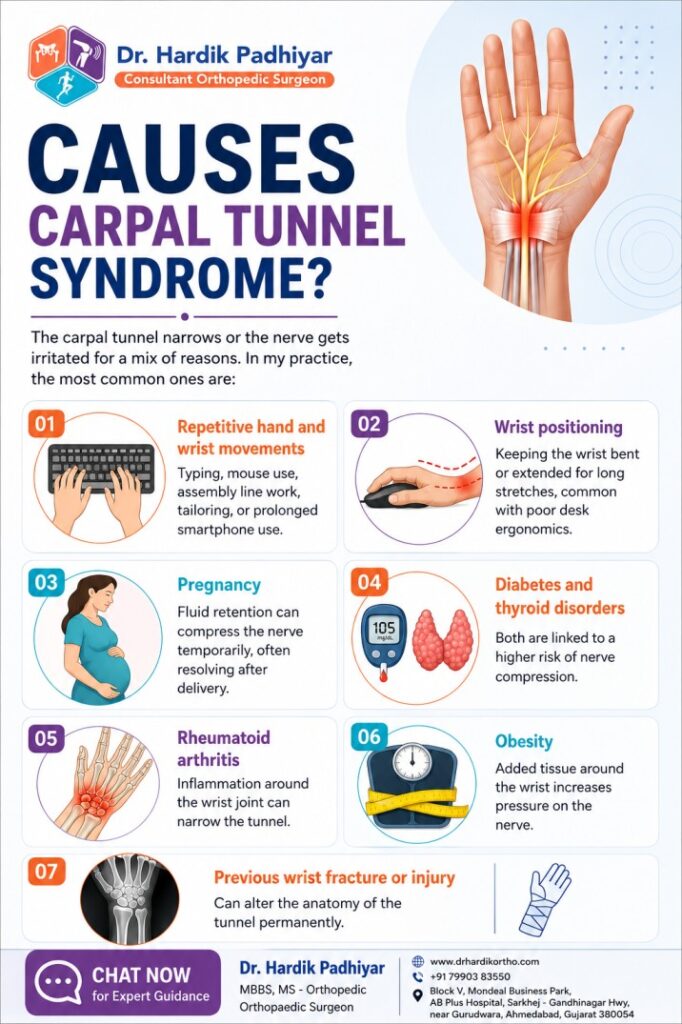
The carpal tunnel narrows or the nerve gets irritated for a mix of reasons. In my practice, the most common ones are:
- Repetitive hand and wrist movements, typing, mouse use, assembly line work, tailoring, or prolonged smartphone use
- Wrist positioning, keeping the wrist bent or extended for long stretches, common with poor desk ergonomics
- Pregnancy, fluid retention can compress the nerve temporarily, often resolving after delivery
- Diabetes and thyroid disorders, both are linked to a higher risk of nerve compression
- Rheumatoid arthritis, inflammation around the wrist joint can narrow the tunnel
- Obesity, added tissue around the wrist increases pressure on the nerve
- Previous wrist fracture or injury, can alter the anatomy of the tunnel permanently
What Are the Symptoms of Carpal Tunnel Syndrome?
Symptoms usually build gradually rather than appearing overnight:
- Numbness or tingling in the thumb, index, middle, and part of the ring finger, notably not the little finger
- Symptoms that are often worse at night, sometimes waking you from sleep
- A sensation of swelling in the fingers even when there’s no visible swelling
- Weak grip strength, dropping cups, struggling to open jars, or fumbling with buttons
- In advanced cases, visible wasting of the muscle at the base of the thumb
If you notice symptoms in your ring and little finger instead, that pattern points toward a different nerve issue (often the ulnar nerve at the elbow) rather than classic carpal tunnel syndrome, worth mentioning when you see a doctor, since it changes the treatment approach.
How Is Carpal Tunnel Syndrome Diagnosed?
Diagnosis starts with a conversation about your symptoms, occupation, and daily hand use, followed by a physical exam. I typically check for:
- Tinel’s sign, gently tapping over the median nerve at the wrist to see if it triggers tingling
- Phalen’s test, having you hold your wrists bent for about a minute to see if it reproduces the numbness
- Grip and pinch strength testing
If the diagnosis isn’t clear-cut, or if we’re deciding between non-surgical and surgical treatment, a nerve conduction study and electromyography (EMG) confirm how well the median nerve is transmitting signals and how severe the compression is. These aren’t needed for every patient, but they’re valuable when symptoms have been going on for months.
How Is Carpal Tunnel Syndrome Treated?
Most patients I see, especially those who come in within the first few months of symptoms starting, respond very well to non-surgical treatment.
Non-surgical treatment typically includes:
- Wrist splinting, worn at night (and sometimes during the day) to keep the wrist in a neutral position and take pressure off the nerve
- Activity and ergonomic modification, adjusting keyboard/mouse height, taking regular breaks from repetitive tasks
- Anti-inflammatory medication, to reduce swelling around the nerve
- Corticosteroid injections, for more persistent inflammation that isn’t settling with splinting alone
- Nerve-gliding exercises, specific stretches that help the median nerve move more freely through the tunnel
When is surgery needed?
If numbness, weakness, or muscle wasting persist despite proper non-surgical treatment, or if nerve testing shows significant compression, I recommend carpal tunnel release surgery. It’s a short, well-established day-care procedure done under local anaesthesia, where the ligament pressing on the nerve is released to relieve the compression. Most patients go home the same day and see steady improvement in numbness over the following weeks, though grip strength recovery can take a few months. Book a consultation if you’ve reached the point where you’re considering this step.
How to Prevent Carpal Tunnel Syndrome from Coming Back
Once treated, a few habit changes go a long way in keeping symptoms from returning, especially for anyone doing desk or repetitive hand work:
- Take a short break every 20–30 minutes to stretch your wrists and fingers
- Keep your wrist in a neutral, straight position while typing rather than bent up or down
- Use an ergonomic keyboard and mouse, and adjust your chair/desk height so your forearms stay level
- Avoid resting your wrist on a hard edge for long periods
- If you notice early tingling, address it early, waiting it out tends to make recovery take longer, not shorter
The Bottom Line
If that tingling in your fingers has become a nightly thing instead of an occasional annoyance, it’s worth getting your wrist properly evaluated rather than shaking it off, literally. Carpal tunnel syndrome responds best when treated early, before the nerve compression has a chance to cause lasting damage. Contact us to book a consultation, or call/WhatsApp us at +91 79903 83550 to get your hand and wrist symptoms properly diagnosed.
Need to Consult an Orthopedic Surgeon?
If you’re experiencing knee pain, hip pain, shoulder pain, sports injuries, fractures, arthritis, or any bone and joint concerns, get expert guidance from Dr. Hardik Padhiyar and explore the right treatment options today.
Frequently Asked Questions
Q: Is carpal tunnel syndrome permanent?
A: Not if it’s caught and treated early. Mild to moderate cases respond very well to splinting and activity changes. Left untreated for years, though, nerve damage can become permanent, which is why early evaluation matters.
Q: Can carpal tunnel syndrome go away on its own?
A: Occasionally, mild cases linked to a temporary cause (like pregnancy) improve on their own. But for most people, especially those with ongoing repetitive strain, it needs active treatment to improve.
Q: Do I need surgery for carpal tunnel syndrome?
A: Most patients never need surgery. It’s typically reserved for cases with persistent symptoms, muscle weakness, or wasting despite proper non-surgical treatment for several months.
Q: Is carpal tunnel surgery painful?
A: The procedure itself is done under local anaesthesia, so it’s not painful during surgery. Mild soreness for a few days afterward is normal and manageable with medication.
Q: How long is recovery after carpal tunnel release surgery?
A: Numbness and tingling usually start improving within weeks. Full grip strength recovery can take a couple of months, depending on how long the nerve was compressed before surgery.
Q: Is carpal tunnel syndrome only caused by typing?
A: No, while desk work is a major factor, it’s also linked to pregnancy, diabetes, thyroid conditions, and repetitive manual work like tailoring or assembly line jobs.
Medical Disclaimer: This blog is for informational purposes only and does not constitute medical advice. Every case of plantar fasciitis is different, and treatment outcomes vary from patient to patient. Please consult Dr. Hardik Padhiyar or a qualified orthopaedics specialist for an accurate diagnosis and a treatment plan suited to your specific condition.