


If the first few steps out of bed feel like you’re walking on broken glass, and it eases off once you’ve been moving for a bit, you’re describing plantar fasciitis almost textbook-perfectly. It’s one of the most common reasons people in Ahmedabad end up in an orthopaedic doctor’s clinic, and yet most patients wait months, hoping it will just go away on its own. I’ve treated hundreds of cases at our practice, from early morning stiffness to fascia that’s been inflamed for over a year, and I can tell you: the earlier you address it, the faster and simpler the fix.
Plantar fasciitis is inflammation or micro-tearing of the plantar fascia, a thick band of tissue running from your heel bone to the base of your toes. It absorbs shock every time your foot hits the ground, which is exactly why it takes such a beating over years of walking, standing, and running.
What Causes Plantar Fasciitis?
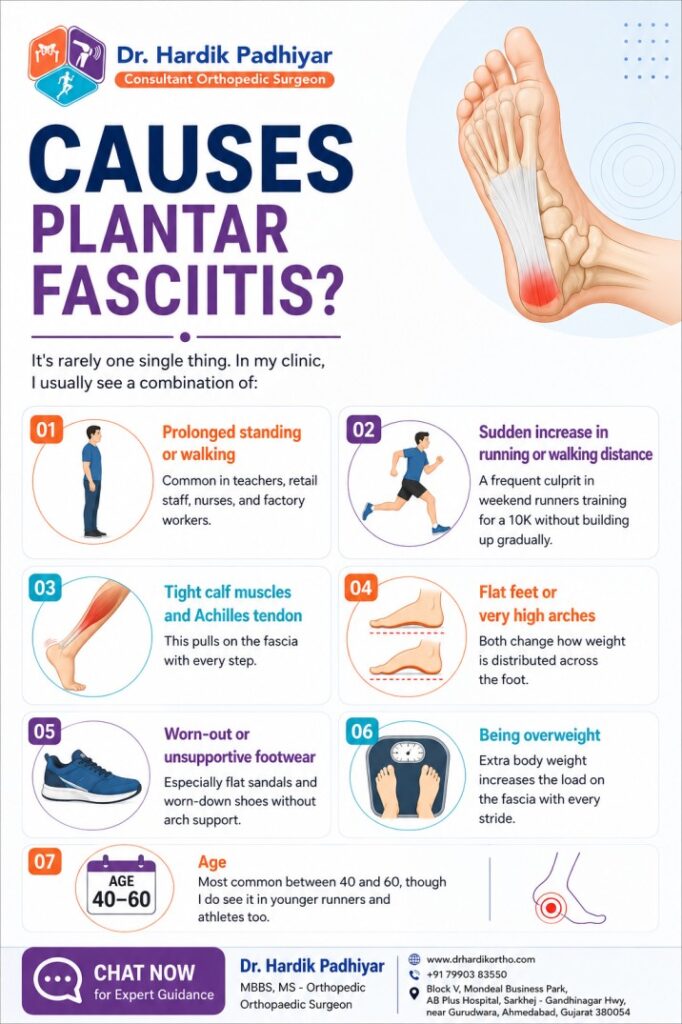
It’s rarely one single thing. In my clinic, I usually see a combination of:
- Prolonged standing or walking, common in teachers, retail staff, nurses, and factory workers
- Sudden increase in running or walking distance, a frequent culprit in weekend runners training for a 10K without building up gradually
- Tight calf muscles and Achilles tendon, this pulls on the fascia with every step
- Flat feet or very high arches, both change how weight is distributed across the foot
- Worn-out or unsupportive footwear, especially flat sandals and worn-down shoes without arch support
- Being overweight, extra body weight increases the load on the fascia with every stride
- Age, most common between 40 and 60, though I do see it in younger runners and athletes too
What Are the Symptoms of Plantar Fasciitis?
The pattern is usually very recognizable once you know what to look for:
- Sharp, stabbing pain in the bottom of the heel, worst with your very first steps in the morning
- Pain that eases after a few minutes of walking, then returns after long periods of standing or at the end of the day
- Tenderness when you press directly on the bottom of the heel
- Stiffness after sitting for a while, getting up from your desk or a long car ride can bring the pain right back
- Increased discomfort after exercise, not necessarily during it
If your pain doesn’t fit this pattern, for instance, if it’s on the side of the ankle, involves swelling and bruising after an injury, or comes with fever, it’s worth getting evaluated, since heel pain can also come from stress fractures, Achilles tendon problems, or nerve issues that need a different approach entirely.
How Is Plantar Fasciitis Diagnosed?
Most of the time, I can diagnose plantar fasciitis through a physical exam and a conversation about your symptoms and daily habits, no expensive testing required. I’ll check for tenderness at the heel, assess your foot arch and gait, and test your ankle flexibility, since tight calves are so often part of the picture. If the pain has been persistent for months, doesn’t respond to initial treatment, or if I suspect a stress fracture or nerve involvement, an X-ray or ultrasound helps rule those out and confirm what’s really going on.
How Is Plantar Fasciitis Treated?
Here’s the good news: most plantar fasciitis cases improve with non-surgical treatment. I always start conservative, and most patients see meaningful relief within 6 to 8 weeks when they stay consistent with the plan.
First-line treatment usually includes:
- Rest and activity modification, not complete inactivity, but cutting back on the movements that flare it up
- Stretching, calf stretches and plantar fascia stretches, done daily, make a bigger difference than most people expect
- Ice application, 15–20 minutes after activity to calm inflammation
- Supportive footwear or orthotic inserts, proper arch support takes pressure off the fascia with every step
- Night splints, keep the fascia gently stretched overnight, which is why mornings hurt less once you’re using one
- Anti-inflammatory medication, short-term use to manage pain and swelling while the tissue heals
If symptoms persist beyond a few months despite consistent conservative treatment, I consider next-step options like corticosteroid injections or extracorporeal shockwave therapy (ESWT), which stimulates healing in chronic, stubborn cases.
Surgery, a plantar fascia release, is reserved for the small percentage of patients who don’t improve after 6 to 12 months of proper non-surgical care. It’s not a decision I take lightly, and I always make sure every reasonable non-surgical option has been tried first. Book a consultation if you’ve reached that point and want to understand whether surgery makes sense for you.
What Can You Do to Prevent Plantar Fasciitis from Coming Back?
Once you’ve dealt with it, prevention matters, plantar fasciitis has a habit of returning if the underlying causes aren’t addressed:
- Replace worn-out shoes regularly and choose footwear with good arch support and cushioning
- Keep stretching your calves and feet even after the pain resolves
- Build up running or walking distance gradually, the classic mistake is increasing mileage too fast
- Maintain a healthy body weight to reduce load on your feet
- If you’re on your feet all day for work, consider a supportive insole rather than pushing through discomfort
The Bottom Line
If that stabbing heel pain has been slowing down your mornings for weeks instead of days, it’s worth getting it looked at properly rather than waiting it out. Plantar fasciitis responds very well to treatment, but it responds best when you start early. Contact us to book a consultation, or call/WhatsApp us at +91 79903 83550 to get your heel pain properly diagnosed and on the path to recovery.
Meet Dr. Hardik, Your Trusted Orthopedic Specialist
If you’re experiencing knee pain, hip pain, shoulder pain, sports injuries, fractures, arthritis, or any bone and joint concerns, get expert guidance from Dr. Hardik Padhiyar and explore the right treatment options today.
Frequently Asked Questions
Q: How long does plantar fasciitis take to heal?
A: Most people notice improvement within 6 to 8 weeks of consistent stretching, footwear changes, and rest. Chronic cases that have been ignored for months can take longer, sometimes up to a year with the right treatment plan.
Q: Can plantar fasciitis heal on its own without treatment?
A: Mild cases sometimes improve with rest alone, but most people who ignore it end up dealing with pain for far longer than necessary. Early treatment almost always leads to a faster recovery.
Q: Is walking bad for plantar fasciitis?
A: Gentle walking in supportive footwear is usually fine and even helpful for circulation, but high-impact activity like running on hard surfaces should be reduced until the inflammation settles.
Q: What’s the difference between plantar fasciitis and a heel spur?
A: A heel spur is a bony growth that can develop from long-term plantar fasciitis, but many people have heel spurs with no pain at all. The pain almost always comes from the inflamed fascia, not the spur itself.
Q: Do I need surgery for plantar fasciitis?
A: Rarely. Over 90% of patients improve with non-surgical treatment. Surgery is only considered after 6 to 12 months of properly followed conservative care without improvement.
Q: Are orthotic inserts worth it or is that just marketing?
A: For plantar fasciitis specifically, they genuinely help. Proper arch support reduces the daily strain on the fascia, which is often the missing piece for people who’ve tried everything else.
Medical Disclaimer: This blog is for informational purposes only and does not constitute medical advice. Every case of plantar fasciitis is different, and treatment outcomes vary from patient to patient. Please consult Dr. Hardik Padhiyar or a qualified orthopaedics specialist for an accurate diagnosis and a treatment plan suited to your specific condition.