
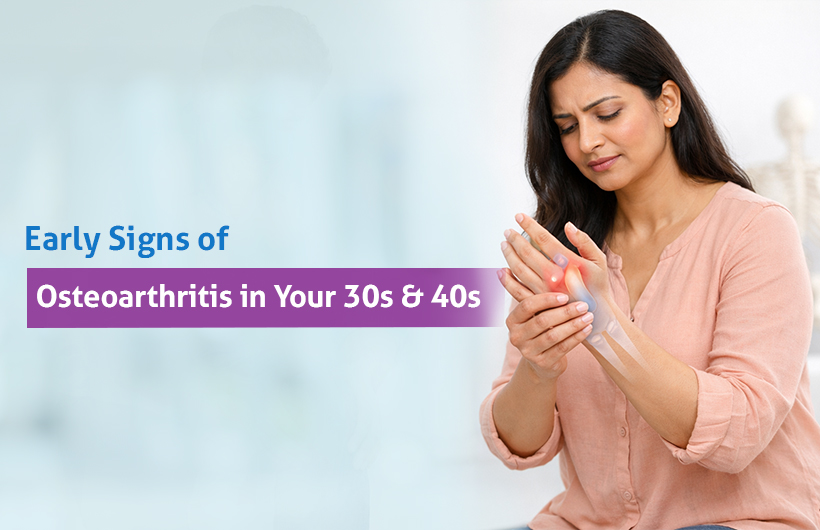
Osteoarthritis is a common joint condition that can quietly begin in your 30s and 40s, especially in weight-bearing joints like knees and hips. Many people dismiss early joint discomfort as just “getting older,” but recognising the signs of osteoarthritis early and taking preventive steps can make a huge difference in preserving mobility and reducing the risk of severe joint damage later in life. In this blog, we’ll explore how to notice these early warning signs and what you can do to prevent progression, guided by professional insights that empower you to take control of your joint health.
Table of Contents
ToggleWhat Are the Early Signs of Knee & Hip Osteoarthritis You Shouldn’t Ignore?
Osteoarthritis doesn’t usually announce itself with sudden, extreme pain. Instead, it tends to start subtly and worsen over time. Being aware of these early symptoms can help you seek evaluation sooner rather than later. Some of the most common early signs of osteoarthritis in the knee and hip include:
1. Pain That Comes and Goes
One of the earliest indicators is intermittent discomfort in the knee or hip, especially after walking long distances, climbing stairs, standing for extended periods, or sitting for a long time. Initially, the pain may ease with rest, but over time it may linger longer or become more frequent.
2. Morning Stiffness or After Long Rest
A stiff or “rusty” feeling in your knee or hip when you first wake up or after sitting for a while is another common early sign. This stiffness usually improves with gentle movement but is often one of the first symptoms people notice.
3. Grinding, Clicking, or Crepitus
You might hear or feel a cracking, popping, or grinding sound when bending or moving your knee or hip. This sensation, known as crepitus, can indicate changes in the joint surfaces as the cartilage begins to wear down.
4. Swelling and Tenderness
Inflammation around the joint can cause visible swelling or warmth when touched. Tenderness in certain areas when pressure is applied is another clue that the joint may be under stress.
5. Reduced Range of Motion
You may find it harder to fully bend or straighten your knee or to lift and turn your leg comfortably at the hip. This “loss of flexibility” can make everyday tasks like sitting in low chairs, tying shoes, or climbing stairs more difficult.
6. Feeling of Instability
A sensation like the joint might “give way,” feel unstable, or wobbly suggests that the muscles supporting the joint are weakening or that the joint structure itself is being compromised.
If you begin to notice these signs, even if they seem mild, it’s worth paying attention. Early symptoms often come and go before they progress to more persistent discomfort, so catching them early can make a big difference in how you manage them.
How Can You Slow Down or Prevent Osteoarthritis in Your 30s & 40s?
The good news is that osteoarthritis doesn’t have to progress rapidly if you take proactive steps. Even if early signs are present, many people can delay serious joint damage with the right lifestyle habits and medical guidance.
1. Maintain a Healthy Weight
Excess weight increases stress on weight-bearing joints like the knees and hips. Even a small reduction in body weight can significantly reduce the load on these joints, easing pain and slowing down cartilage wear.
2. Stay Active with Low-Impact Exercise
Regular physical activity helps strengthen the muscles around your joints, supports joint lubrication, and maintains flexibility. Swimming, cycling, and walking are excellent low-impact exercises that protect joints without adding stress.
3. Strengthen Supporting Muscles
Exercise programs that focus on building the strength of your thigh and hip muscles can act like natural shock absorbers for your joints. These exercises improve stability and reduce the risk of further cartilage damage.
4. Modify High-Impact Activities
If you enjoy high-impact sports or repetitive movements that place a lot of strain on your knees and hips, consider adjusting your routine to include gentler alternatives or add rest days to give joints a chance to recover.
5. Pay Attention to Pain and Don’t Ignore It
Mild pain that doesn’t go away with rest, or pain that interferes with daily activities over several weeks, should be evaluated. Early intervention can help tailor treatment plans for your specific needs and may help avoid progression to more severe stages.
When Should You See a Doctor?
If the symptoms above persist for more than a few weeks, or if you notice swelling, stiffness, or limitations in movement that don’t improve with rest and simple care, it’s time to consult an expert. Especially in your 30s and 40s, early attention helps protect your joints for the long run.
Dr. Hardik Padhiyar, a trusted knee replacement surgeon in Ahmedabad, often emphasises the importance of early evaluation and personalised care for joint issues. With the right diagnosis and management plan, you can significantly reduce pain and protect your joint health. As a leading specialist affiliated with a reputable orthopedic hospital in Ahmedabad, Dr. Padhiyar has helped many patients understand their joint symptoms and pursue the most effective treatments. Whether you’re experiencing early stiffness or more persistent discomfort, he guides you toward the best options for relief and long-term joint preservation.
For those seeking targeted hip pain treatment in Ahmedabad or looking for a trusted hip pain doctor near you, an early consultation can clarify whether your symptoms stem from early osteoarthritis or another joint condition requiring attention. Early diagnosis is not just about relief today, it’s about safeguarding your mobility and quality of life for decades to come.
Conclusion: Don’t Wait Until It’s Too Late
Osteoarthritis doesn’t have to define your future. By understanding the early signs of osteoarthritis, listening to your body, and making smart lifestyle choices, you can prevent or delay serious joint damage. From maintaining a healthy weight to strengthening muscles and seeking expert care when needed, every step you take today can protect your knees and hips tomorrow.
If you’re noticing persistent discomfort or changes in your knee or hip movement, don’t wait. Reach out to an experienced orthopaedic specialist like Dr. Hardik Padhiyar because early action today can mean a more active, pain-free life in the years ahead.