
By Dr. Hardik Padhiyar, MBBS, MS (Ortho) | Orthopaedic and Joint Replacement Surgeon, AB Plus Hospital, SG Highway, Ahmedabad
Diwali cleaning injuries to the knee are common, and the reason is usually simple: scrubbing floors, drawing rangoli and holding deep squats load your kneecap and cartilage far beyond a normal day. Most flare-ups settle within a few days, but pain that locks, swells or lingers needs an exam from an orthopedic doctor in Ahmedabad.
Many Diwali cleaning injuries are only overuse. When the cleaning exposes worn cartilage, a knee replacement surgeon in Ahmedabad can tell you whether something bigger is going on.
I see the same pattern of Diwali cleaning injuries every year around the festival. Someone scrubs the kitchen floor, shifts furniture and finishes the rangoli in one day, and by Monday the knee is swollen. This guide explains why Diwali cleaning injuries hurt the knee and when to see a doctor.
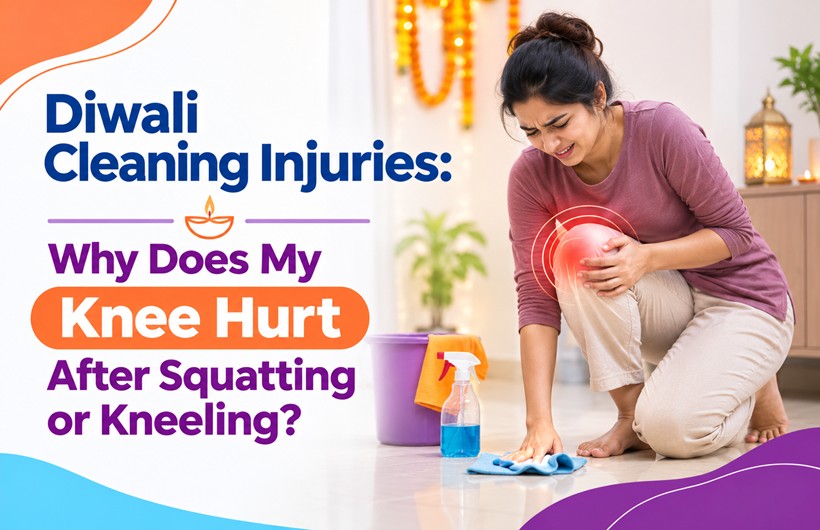
Why Do Diwali Cleaning Injuries Make Your Knee Hurt After Squatting or Kneeling?
Knee pain after squatting usually comes from load. When you bend the knee deeply, the kneecap presses harder against the thigh bone, and the cartilage behind it absorbs most of that pressure. Hold that position for 30 minutes, then stand up fast, and the joint has little time to recover.
Kneeling adds a second problem. A hard floor presses on the front of the knee, where a small fluid sac called the bursa sits under the skin. Repeated pressure irritates it, which is why knee pain after kneeling often comes with warm, puffy swelling in front of the kneecap, one of the most visible Diwali cleaning injuries.
A few hours of cleaning once a year is also a sudden jump in workload, and tired thigh muscles absorb less shock, so more of it reaches the cartilage. That jump is behind most Diwali cleaning injuries I treat, and it is why Diwali cleaning injuries peak in festival week.
Which Diwali Cleaning Injuries Affect the Knee Most Often?
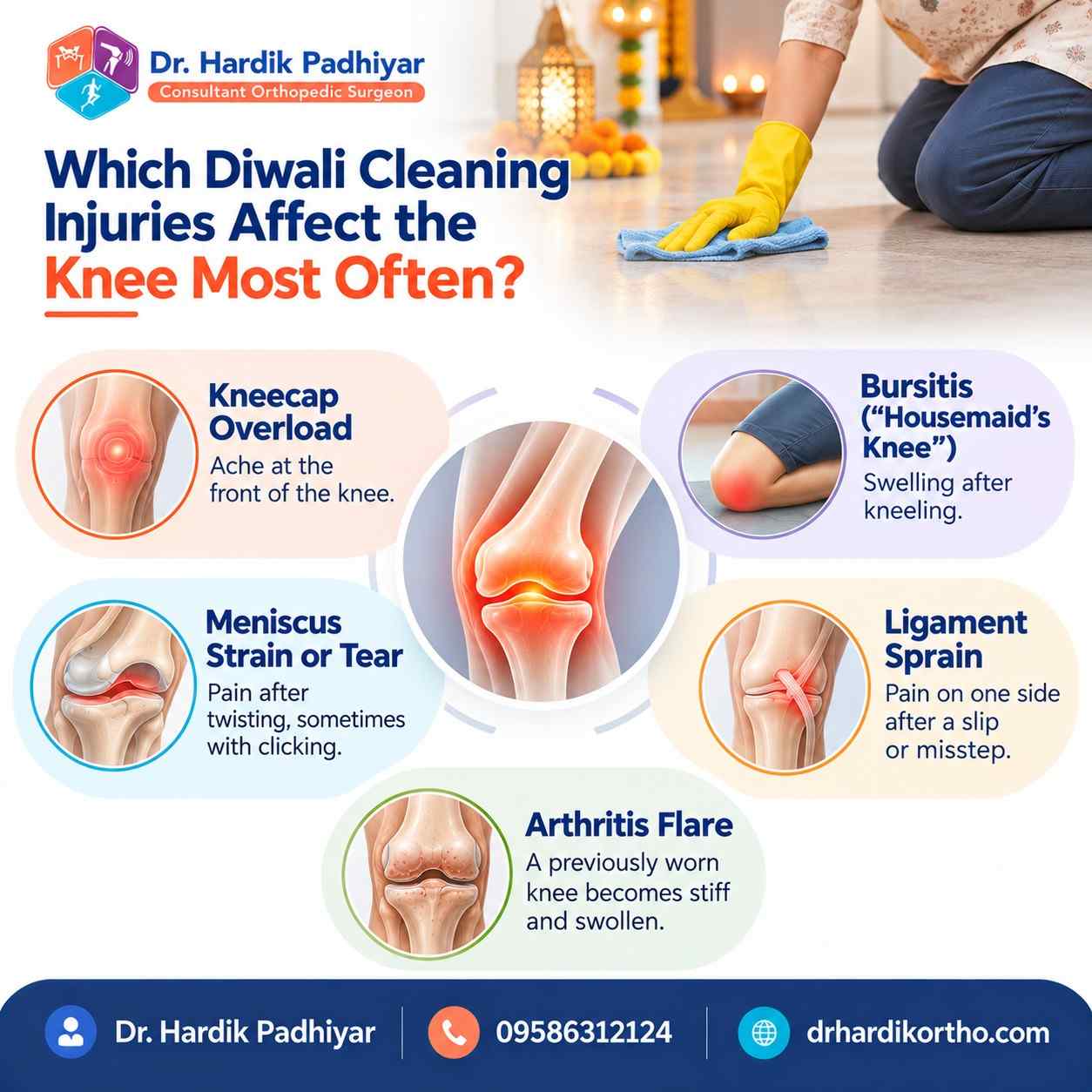
Diwali cleaning injuries, like other knee injuries during household cleaning, fall into a few patterns:
- Kneecap overload: a dull ache at the front of the knee, worse on stairs and when rising from a squat.
- Bursitis (“housemaid’s knee”): swelling and tenderness over the kneecap after kneeling on hard floors.
- Meniscus strain or tear: pain along the joint line after twisting while rising from a squat, sometimes with catching or clicking.
- Ligament sprain: pain on one side of the knee after a sideways slip or a misstep off a stool.
- Arthritis flare: a joint that is already worn becomes stiff and swollen after unusual activity.
The first two are the most common and usually settle with rest. A meniscus tear or ligament sprain needs an examination, because ignoring it can leave the knee unstable. Each of these Diwali cleaning injuries feels different, so note where the pain sits and what triggers it.
Why Does Knee Pain During Floor Cleaning Get Worse in Indian Homes?
Many Ahmedabad homes still run on floor-level routines: wiping the floor from a deep squat, sitting cross-legged to sort puja items, and drawing rangoli at ground level for an hour or more. Each keeps the knee bent past 90 degrees, and hours of this is how Diwali cleaning injuries build up quietly.
The research supports the concern, with limits. A meta-analysis of occupational studies found that the odds of knee osteoarthritis rose by about 26% for every 5,000 hours of cumulative kneeling (odds ratio 1.26). That comes from people who kneel for work over many years, so a few days of festival cleaning will not wear out a healthy knee. An arthritic knee reacts much more strongly to the same load.
On the SG Highway and Thaltej side of the city, I commonly see desk jobs and little exercise all year, then one very physical week. These Diwali cleaning injuries are a mismatch between the week’s workload and the knee’s conditioning.
What to Do for Knee Pain After Cleaning in the First 72 Hours
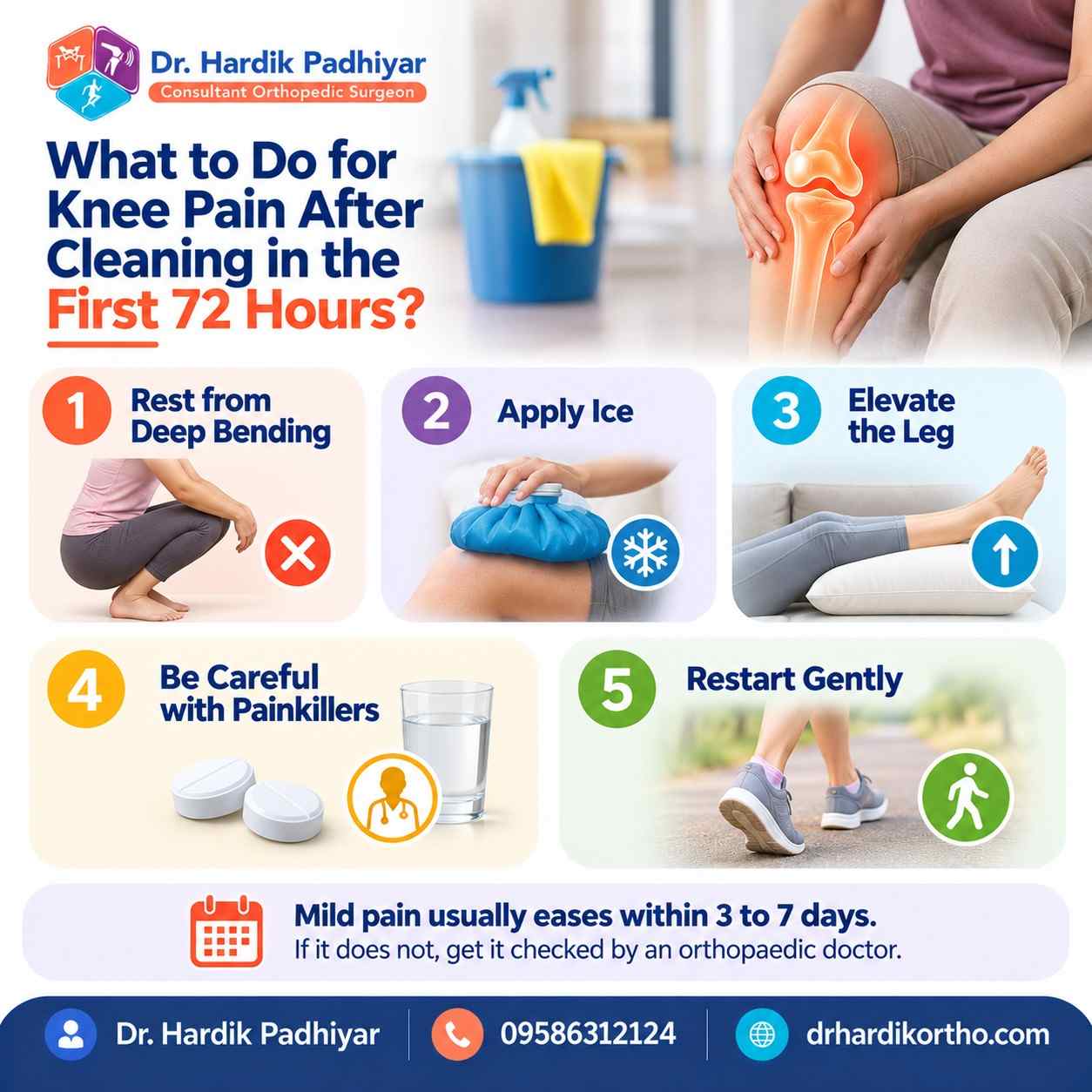
Most Diwali cleaning injuries respond to the same first steps:
- Rest from deep bending. Avoid squatting and kneeling for 2 to 3 days.
- Apply ice. Wrap ice in a thin cloth and hold it on the knee for 15 to 20 minutes, a few times a day, for two days.
- Keep the leg raised when you sit.
- Be careful with painkillers. Take them only as a doctor or pharmacist advises, especially with kidney, stomach or blood pressure problems.
- Restart gently. Once swelling eases, return to short walks.
Mild overuse pain usually eases within 3 to 7 days. If it does not, the cause is probably more than tired muscle.
When Should You See an Orthopedic Doctor for Knee Pain After Kneeling?
Diwali cleaning injuries that show any of these signs need an examination:
- You cannot put full weight on the leg.
- The knee locks, catches or gives way.
- Swelling appears within hours of an injury, or lasts longer than a week.
- Redness, heat and fever appear together, which can signal infection and needs same-day care.
- The calf becomes swollen or painful, which can signal a blood clot and needs urgent care.
Dr. Hardik Padhiyar examines knee injuries at AB Plus Hospital on SG Highway. If the pain suggests more than a strain, he may order an X-ray or MRI to separate simple overload from a meniscus or ligament injury. If you are unsure whether your symptoms need a visit, call us at +91 79903 83550 and describe what happened.
Can Diwali Cleaning Injuries Mean You Need a Knee Replacement?
Not directly, because Diwali cleaning injuries are usually soft tissue overload. Knee replacement surgery treats advanced arthritis, not a sprain or an inflamed bursa. Still, for some people a cleaning session is the first time they notice how limited their knee has become.
Signs that point to arthritis rather than a one-off injury include pain with most steps, morning stiffness, night pain, trouble with stairs and a knee that looks bowed. An X-ray showing a narrowed joint space confirms it, and it separates arthritis from the usual Diwali cleaning injuries.
Most patients first try weight management, physiotherapy and medication. Surgery is considered when those no longer control the pain. Our guide to knee replacement recovery covers what happens after the operation.
How Can You Prevent Diwali Cleaning Injuries to Your Knees?
Preventing Diwali cleaning injuries takes small changes:
- Warm up first. Walk for 5 minutes and do gentle leg swings.
- Avoid the full squat. Sit on a low stool or use a long-handled mop.
- Pad your knees. Use a thick foam pad and alternate half-kneeling sides.
- Change position every 20 to 30 minutes. Stand, walk and stretch.
- Rise in two steps. Use a support and avoid twisting as you stand.
- Spread the work over several days.
These habits lower the risk of Diwali cleaning injuries because they cut the time spent in deep bending and the sudden twists that cause most problems.
Conclusion
Most Diwali cleaning injuries of the knee come from overload rather than lasting damage, and they improve with a few days of rest and better positions. Pain that locks, swells or stays beyond a week is a reason for a proper examination. Pacing the work protects your knees through the festival and the weeks after.
Best Knee Replacement Surgeon in Ahmedabad
If one of these Diwali cleaning injuries has kept your knee painful for more than a week, contact us to book a consultation with Dr. Hardik Padhiyar and get a clear plan for recovery.
Frequently Asked Questions
Why does my knee hurt after squatting while cleaning?
Deep squatting presses the kneecap against the thigh bone and overloads the cartilage behind it. This overload is the usual cause of Diwali cleaning injuries, and tired thigh muscles make it worse. The pain usually fades in a few days.
Is knee pain after kneeling serious?
Usually not, since most Diwali cleaning injuries involve a swollen bursa or an irritated kneecap. It becomes serious with fever, redness and heat, or when you cannot bear weight.
How long do Diwali cleaning injuries to the knee take to heal?
Mild overuse pain often settles in 3 to 7 days with rest. A meniscus or ligament injury can take several weeks and should be assessed by a doctor.
Can squatting and kneeling cause arthritis?
Years of heavy kneeling or squatting at work are linked to a higher risk of knee osteoarthritis. Diwali cleaning injuries rarely cause arthritis, but they can aggravate a knee that is already worn.
Medical disclaimer: This article is for general information only. It does not replace a medical examination or advice from a qualified doctor. Please consult a doctor about your own symptoms.